Speed to Lead
Speed to Lead for Contractors: Why Response Time Wins Jobs
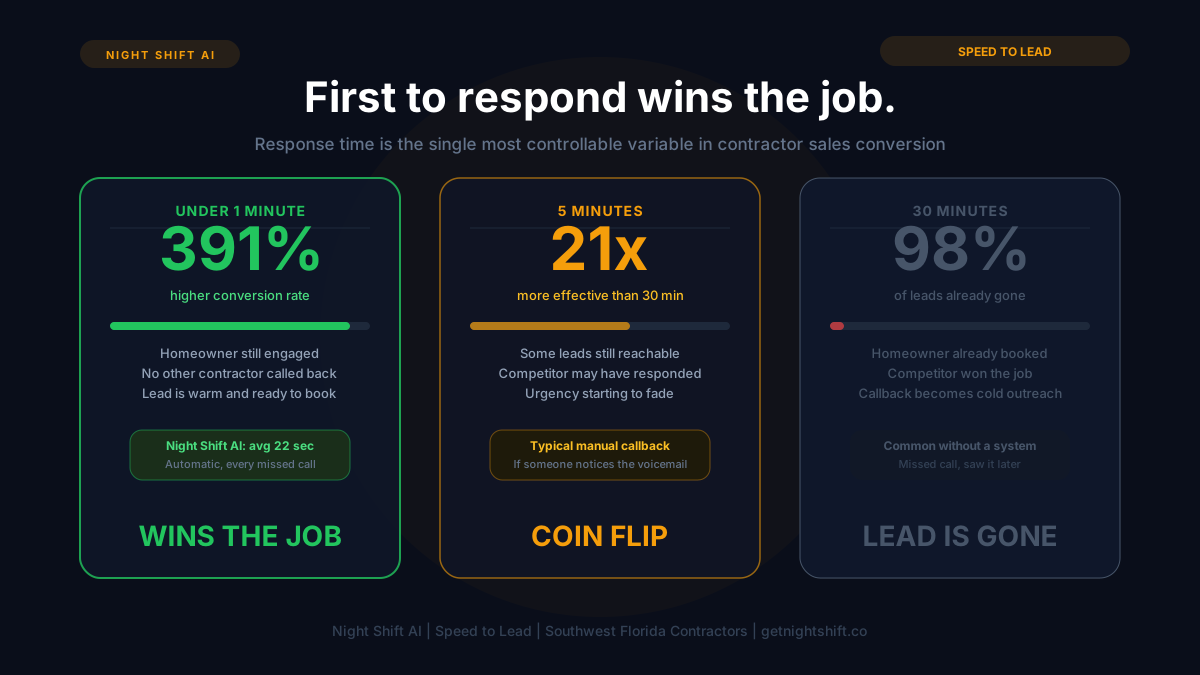
Speed to lead is the single most controllable variable in home service sales. Contractors who respond within one minute convert significantly more leads than those who wait five. Those who wait five minutes outperform those who wait thirty. The research is consistent and the mechanism is simple: homeowners with urgent service needs contact several businesses and book with whoever provides a clear, professional response first. This guide explains the speed-to-lead problem for Southwest Florida contractors and how to close the gap without hiring.
What speed to lead means for contractors
Speed to lead is the time between a homeowner's first contact, phone call, form submission, Google Business Profile message, or social media inquiry, and the contractor's first meaningful response. For phone calls, first response is the first live answer or the first text sent after a missed call. For forms, it is the first email or call back to the submission.
Most home service research puts the critical window at one to five minutes. Within one minute, the probability of converting the lead is dramatically higher than at five minutes. By thirty minutes, most emergency leads have already found another provider. By the next morning, scheduled-work leads have typically moved on to a competitor who responded faster.
Why contractors have slow speed to lead
The root causes are structural, not personal. Calls are missed while technicians are in the field, during active dispatch windows, during lunch, or after hours when the office is closed. Website forms sit in a shared inbox and get reviewed when someone has time. Google Business Profile messages do not trigger notifications to anyone who can act on them. Voicemail boxes get checked once a day when someone remembers.
None of these are failures of effort. They are gaps in a system that was built around business-hours operations, not the 24/7 reality of homeowner demand. Southwest Florida contractors face particular pressure because the seasonal market and competitive density mean homeowners actively compare multiple providers at once.
The speed-to-lead math for Southwest Florida trades
For HVAC contractors during summer emergency season, the one-minute window is not an aspiration, it is the competitive standard. A homeowner in Sarasota whose AC fails at 7 PM calls two or three HVAC companies. The first to respond with a useful message, even a text asking for the address and urgency level, is positioned to close the job before the second company answers the phone.
For plumbing emergencies, active leaks, backed-up drains, water heater failures, the same dynamic applies at every hour of the day. For post-storm roofing calls in Charlotte or Lee counties, the window is even more compressed because dozens of homeowners are calling simultaneously after a major storm event. Speed across all those calls simultaneously requires automation, not manual callbacks.
How missed call text-back closes the speed gap
An automated text-back sent within seconds of a missed call is the fastest practical solution to the speed-to-lead problem for most contractors. It does not require hiring, does not require changing phone systems, and does not require the business owner to be available 24/7. It simply ensures that every missed call receives an immediate, professional response that starts the qualification conversation.
The text captures service type, urgency, and location while the lead is still in active search mode. The dispatcher or owner gets an alert with full context. The follow-up call starts with information instead of from zero. And critically, the homeowner has already started a conversation with your business, making it significantly less likely they will call and book with a competitor.
Speed to lead as part of the full growth stack
Speed to lead is the first link in the lead-generation chain for home service contractors. SEO and Google Ads bring traffic. Local SEO and Google Business Profile optimization generate calls. But if those calls are not answered quickly, the upstream investment in traffic is wasted. The right sequence is to fix lead capture before adding lead volume.
Night Shift AI reviews the full lead path, speed to lead, after-hours handling, form follow-up, CRM tracking, and source attribution, through the Free Missed Lead Audit. The audit identifies where response speed is costing the most before recommending any increase in advertising spend.
What this covers for Southwest Florida contractors
- Speed-to-lead gap analysis across all inbound contact paths
- Missed call text-back with under 30-second response time
- Form submission follow-up automation and owner alerts
- After-hours and weekend lead capture
- Google Business Profile call and message response setup
- CRM tracking to measure response time and conversion by source
Find out where your response speed is costing you jobs
The Free Missed Lead Audit reviews your current speed to lead across phone, forms, GBP, and after-hours contact paths, and shows which gaps are costing the most in booked estimates.
Get My Free Missed Lead AuditFrequently Asked Questions
What is speed to lead for contractors?
Speed to lead is the time between a homeowner's first contact and the contractor's first response. Research consistently shows that contractors who respond within one minute convert significantly more leads than those who wait 30 minutes or longer. For emergency service calls, fast response is often the deciding factor in who gets hired.
How does missed call text-back improve speed to lead?
Missed call text-back eliminates the gap between a missed call and first contractor contact. Instead of waiting for the contractor to check voicemail and call back, which can take hours, the homeowner receives an automatic text within seconds of the missed call, starting the qualification conversation immediately.
What is a good speed-to-lead target for home service contractors?
The target is under five minutes for any inbound lead. Under one minute is ideal for phone calls. For emergency calls, AC failures, plumbing leaks, electrical issues, every minute of delay increases the probability the homeowner has already called a competitor.
Why do contractors have slow speed to lead?
Common causes include calls missed during jobs, no automated follow-up for after-hours calls, website forms with no owner notification, voicemail boxes that are not checked promptly, and no CRM to route and track lead status. Night Shift AI's free audit identifies which gaps are costing the most.