AI vs. Human Receptionist
AI Receptionist vs. Human Receptionist for Contractors: Which One Wins More Jobs?
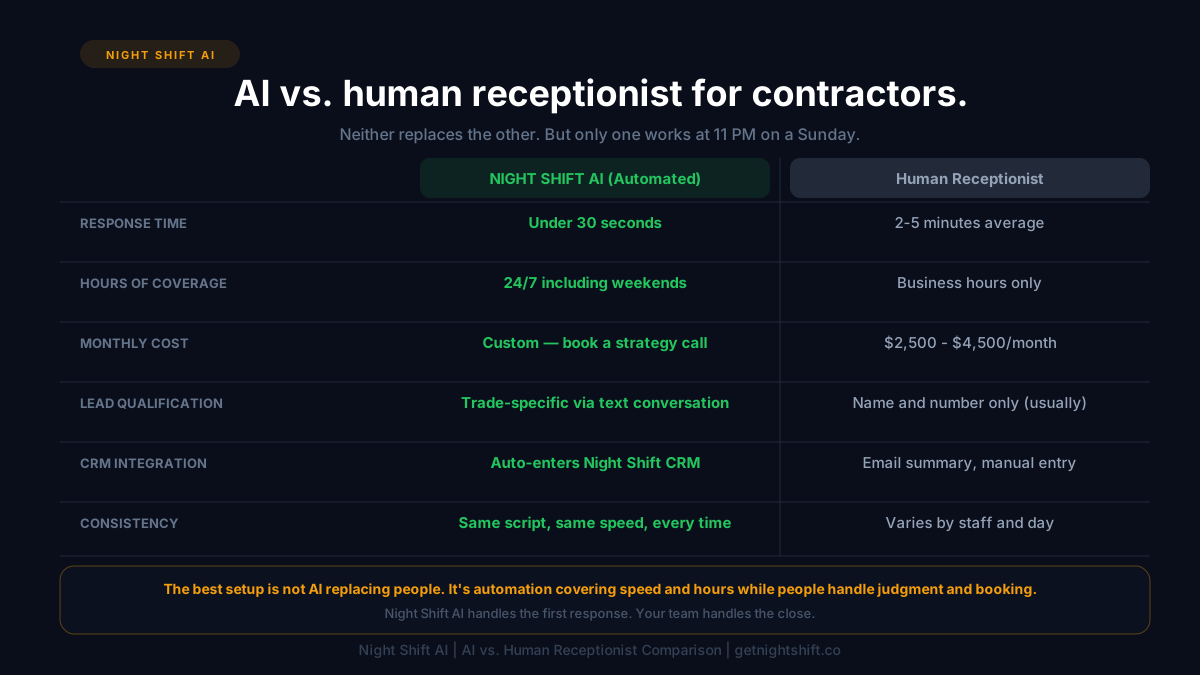
For most contractors with 1 to 10 trucks, the receptionist question is not AI versus human, it is how to build a system that captures every lead without adding full-time payroll. AI wins the window immediately after a missed call. Your team wins the estimate and the close. The winning setup for most Southwest Florida contractors is a hybrid: AI for after-hours and overflow, your people for scheduling and booking. This guide walks through what each option actually costs, where each one fails, and when the hybrid model is the right call.
The three real options contractors have
AI receptionist: automated text-back, call handling, or both. Responds in seconds, works 24/7, starts at $29 to $299 per month depending on features. Does not build rapport, cannot handle nuanced conversations, but does not miss calls at 8 PM on a Saturday in August.
Virtual receptionist: a remote human who answers calls on behalf of multiple businesses. Extended hours, more conversational than AI, typically $250 to $800 per month. Not true 24/7. The person answering your calls is also answering for several other businesses.
In-person receptionist: a dedicated hire who works from your office. Business hours only. Adds warmth, judgment, and a brand presence at the front of the phone. Annual cost including payroll taxes, benefits, workers compensation, and paid time off is a major overhead commitment, a number worth calculating before you post the job listing.
Why AI wins the first five minutes
The moment a call goes unanswered is when the job is most at risk. Research consistently shows that the majority of homeowners book with the first contractor to respond, not the most experienced or the best reviewed. The first to respond.
At 8 PM when a Sarasota homeowner's AC stops cooling, they call two or three HVAC companies. Company A goes to voicemail. Company B rings out. Company C sends a text within a minute: 'Hi, this is [Business Name], sorry we missed your call. What's happening with your AC and what city are you in?' Company C gets the job. Not because they have better technicians or lower prices. Because they were the first to respond in the window when the homeowner was ready to commit.
AI does not close jobs. Your team closes jobs. But AI protects the window where most jobs are lost, the two to five minutes after a missed call, before your team even knows the call came in.
The missed-call revenue math
Most contractors think of missed calls as a scheduling problem. Running the numbers usually changes that. Estimate missed calls per week, multiply by average job value, multiply by close rate, multiply by 52. The annual number for most small contractors in Southwest Florida is large enough to fund a full-time hire several times over, and it is coming from demand that already exists.
These are illustrative estimates based on typical Southwest Florida job ranges, not guarantees. The point is not precision. It is that even conservative numbers reveal a revenue leak that more advertising cannot fix. You already have the demand. The question is whether it is being captured.
When you still need a human
AI handles intake. Humans close jobs. That division of labor works because the initial home service inquiry, HVAC, plumbing, roofing, pool, pest, electrical, is almost always simple: what do you need, where are you, how urgent is it. AI handles that intake reliably and consistently. The human follow-up call starts with context instead of from zero.
A human receptionist adds clear value for nuanced scheduling conversations, callers who need significant reassurance, commercial clients with multi-step processes, and any call where the relationship itself is part of the sale. For most 1 to 10 truck Southwest Florida contractors, that describes a minority of inbound calls.
Best setup by contractor type in Southwest Florida
HVAC contractors face the most acute after-hours problem of any trade in Florida. June through September, a broken unit at 7 PM is a same-night job. AI covers that window. Your dispatcher handles scheduling during the day. For a 2 to 5 truck HVAC company in Sarasota or Venice, this setup provides 24/7 coverage without a full-time hire.
Plumbing contractors deal with two call types: emergencies and scheduled work. AI captures emergency details immediately and notifies on-call staff with full context. Roofing contractors have the most volatile call patterns in the trades, post-storm volume spikes are best handled by AI catching every call in real time while the sales team works the qualified list. Pool service, pest control, landscaping, screen enclosure, and garage door contractors follow the same pattern: AI catches weekends and evenings, your team follows up during business hours.
What this covers for Southwest Florida contractors
- AI first-response setup for missed calls and after-hours
- Hybrid AI plus team model for 24/7 coverage without payroll
- Trade-specific urgency triage and on-call routing
- CRM handoff from AI intake to dispatcher or office staff
- Cost comparison across AI, virtual, and in-person options
- Free Missed Lead Audit to identify current response gaps
Find the right receptionist setup for your business
The Free Missed Lead Audit reviews your current call handling, after-hours exposure, and response gaps to recommend whether AI, hybrid, or a different setup is the right fit for your trade and call volume.
Get My Free Missed Lead AuditFrequently Asked Questions
Will my customers know they're texting with AI?
Night Shift AI doesn't pretend to be a person. It sends a natural text from your business number. Most customers appreciate the fast response more than they care who sent it. For calls that need a real conversation, the system routes to your team.
Can an AI receptionist actually book estimates?
It can collect everything needed to book, service type, address, urgency, preferred callback time, and route that to your dispatcher or CRM with a notification. The confirmation is typically handled by your team. AI's job is to stop the lead going cold, not to close the job.
What if I already have an office manager?
Night Shift AI works alongside your existing team. It catches calls that come in when your office manager is on another line, at lunch, or after hours. It's backup coverage and after-hours capture, not a replacement for your staff.
Is AI better than a live answering service?
Different use case. A live answering service handles calls with a human voice in real time but typically doesn't qualify leads, send automated follow-up texts, or integrate with your CRM. For pure missed-call recovery, especially after hours, automated text-back is faster and more cost-effective. Many contractors use both.
What happens to emergency calls?
Night Shift AI captures urgency in the first reply, 'broken AC,' 'active leak,' 'no power', and sends a priority notification to your on-call staff immediately. You define what counts as an emergency and what the escalation looks like.
What's the best receptionist setup for a small HVAC or plumbing company in SW Florida?
AI for after-hours and overflow. Your dispatcher or office staff for business-hours scheduling. This hybrid gives you 24/7 coverage without a full-time hire, and during peak summer AC season, no emergency call slips through after 5 PM.
Do I need to change my phone number or phone system?
No. Night Shift AI works via call forwarding from your existing number. No hardware changes, no new phone lines, no disruption to how your team currently works.